
How To Actually Think About Adding Amenities
Saunas, cold plunges, recovery rooms, the whole thing…

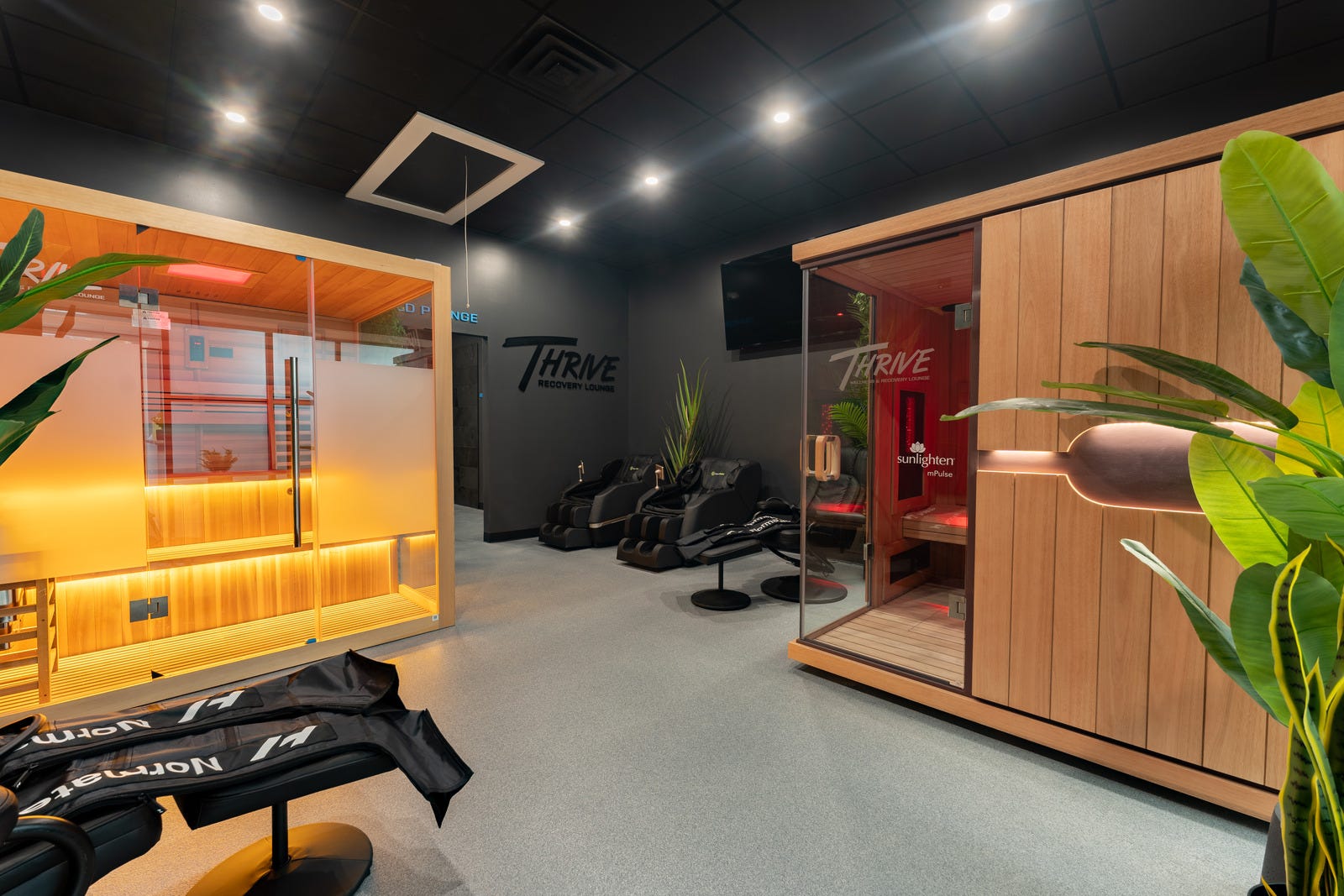
A lot of open gym operators are looking at the same shopping list right now.
Sauna. Cold plunge. Normatec boots. Theragun. Some kind of recovery lounge.
Fine. Maybe.
But before you drop tens of thousands of dollars on it, run the decision through an actual filter instead of just buying because it looks cool on Instagram.
Here’s the filter.
First Question: Should You Even Be Considering This?
If you run a group fitness gym, the answer is almost always no.
Unless your entire concept is a wellness social club that happens to include classes, stop reading. Stick with what’s working.
The amenity conversation belongs to open gym models. Pay for access, do your own thing. That’s the customer who actually uses recovery amenities at any meaningful rate.
Everyone else, save your money.
Second Question: What Is Your Hyper-Local Competition Doing?
Two scenarios.
Scenario A: Competition has amenities.
Go join their gym. For 90 days. Three to four times a week. Different times of day.
Count how many people actually use the sauna. The cold plunge. The recovery room.
Ask the front desk how many members they have. Do the math.
If utilization is below 20%, you have your answer. The market doesn’t want it badly enough to justify the cost. Save your capital.
The exception: if utilization is low and you can clearly point to why (mold on the wall, broken equipment, creepy guy in the sauna), then it’s not the amenity that’s failing. It’s the execution.
Scenario B: Competition doesn’t have amenities.
Same drill. Join the gym. Talk to people.
Set a goal of three to four conversations per visit. Be transparent. “Hey, I’m thinking about opening a gym someday. Curious if you’d actually use a sauna or cold plunge here.”
Do that 12-plus times across 90 days and you’ll have real data. Take notes after every visit. Don’t trust your memory.
That’s research. That’s how the decision should get made.
A Word On Industry Data
Don’t bother looking for it.
The conferences don’t have it. URSA doesn’t have it. The boutique fitness reports don’t have it.
The closest benchmark out there, based on what comes up in conversations with open gym operators and the data I see from clients, is this:
20% utilization is the A+ standard.
That’s the bar. If 20% of your members are using the amenity regularly, the cost is generally justifiable.
What’s actually happening in most independent open gyms? Closer to 10%. Sometimes less. Operators will tell you flat out that they spent serious money on saunas and a small fraction of their membership ever touches them.
That’s the reality outside of Equinox and Lifetime.
Third Question: Are You Capitalized Enough To Do It Right?
This is where most amenity additions die.
Doing it on a budget always shows. And the client experience suffers immediately.
I worked with a gym that built out a recovery area before we got involved. They were under-capitalized for what they were trying to pull off. The cold plunge was crammed into a corner. There was no place to change. No place to rinse off before getting in the plunge. The flow was broken.
One of their investors was so embarrassed by it that they put up additional money to tear it out and redo it. That’s the kind of cost a half-effort here actually creates.
If your plan is “I’ll just put in one two-person co-ed sauna and see what happens,” I can already tell you what happens. Some woman walks in, hopes nobody else comes in, and then a heavy-breathing creep shows up and stares at her for 20 minutes.
That’s not an amenity. That’s a liability.
If you can’t afford to do it properly, don’t do it at all.
A Note On Recurring Cost
The number that gets missed in almost every pro forma I review is the carrying cost on saunas and cold plunges.
I had an operator show me a pro forma once with no line item for monthly maintenance on either. No additional construction cost for the rooms themselves either.
Quick reality check on what that actually involves.
A steam sauna needs a specific amount of air return to handle the heat and moisture. Get that wrong and within three months the drywall is bubbling, peeling, and growing mold.
Cold plunges have filters that clog with hair, temperature controls that fail, and members who break things. There’s always a problem in the first six months.
If your pro forma doesn’t have a real line item for maintenance, repair, and consumables on these units, the pro forma is fiction.
Fourth Question: How Are You Actually Going To Monetize It?
There are two clean models. Pick one.
Model 1: High price point, all-inclusive.
The amenities are baked into the membership. Everyone pays for them whether they use them or not.
This works if your price point is high enough to absorb the cost. The big luxury clubs charge a premium and nobody walks in trying to negotiate the amenities out of their membership. That’s not the conversation. That’s just what it costs.
Model 2: Pay-to-play tiers.
Base membership gets you access to the gym. Higher tier gets you access to the amenities.
This requires gatekeeping, which has to be designed into the facility from day one. Most operators don’t think about this until it’s too late.
You either put the recovery area off to one side of the front desk so it requires a scan-in, or you build a key fob system into a separate room. Either way, you need a way to stop people from holding the door open for each other.
If you can’t gatekeep it, you can’t tier it. And if you can’t tier it, you’re back to Model 1 by default.
Run It Through The Filter
Are you the right business model for this? (Open gym, mostly.)
What does your local market actually want, based on real research?
Can you afford to do it properly?
How are you monetizing it?
If any of those answers is weak, the amenity isn’t ready.
I’m not saying don’t do amenities. I’m saying stop romanticizing them. They’re a serious capital expense with serious operational drag and a much narrower utilization rate than you think.
The smaller stuff (sweat towels, cold brew on tap, pre-workout dispensers) is a different conversation. That’s easy to run the numbers on.
The expensive stuff with facility design implications and recurring maintenance is the stuff that ruins pro formas.
Run the filter before you sign the order.
If you’re a gym owner looking to lease or purchase a building, we can help. Send us a DM or head over to www.gymrealestate.co to book a Discovery Call so we can learn more about your project.

